The Mura Journal
Will It Be Comfortable All Day? Fit Checks That Matter
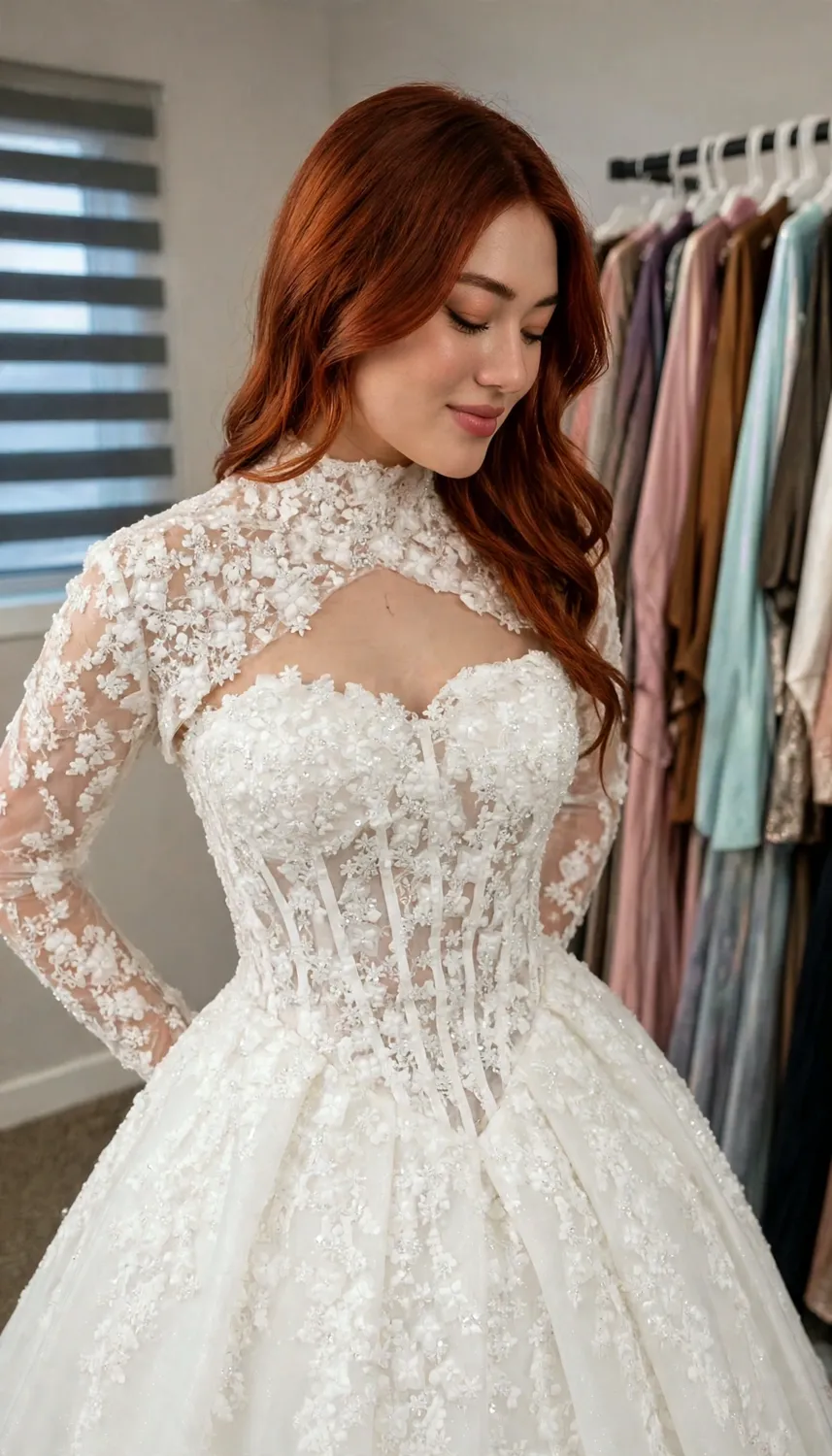
A wedding dress gets worn for ten, twelve, sometimes fourteen hours — through photos, a ceremony, a receiving line, dinner, speeches, and dancing. A fitting lasts twenty minutes. That mismatch is why comfort has to be checked deliberately, not assumed from a pretty moment in front of the mirror. Here are the fit checks that predict how a dress will feel at hour ten, and the questions to ask while you're wearing it.
The movement circuit
Before you decide on any dress, put it through a small circuit. Sit down fully — you'll sit for dinner and in the car — and notice whether the bodice digs or the skirt strains. Stand and raise both arms as if you're hugging someone taller than you; straps and sleeves should allow it without a tug-of-war. Walk the length of the room at a natural pace, turn around, and take a few steps backward the way you will at the altar. Bend slightly, as if picking up your bouquet from a chair. None of this is glamorous, and all of it is information: a dress that complains during any of these will complain much louder by the reception.
Where discomfort actually starts
- Boning and edges. A structured bodice should feel like support, not like a cage. The top edge should sit against you without biting when you breathe deeply or sit.
- Straps and sleeves. Straps that slip in the fitting will slip all day. Sleeve lace should flex at the elbow; if you can't comfortably bend your arm, the sleeve needs ease.
- Weight distribution. A heavy skirt hung from the waist alone will ache by evening. A well-built dress shares its weight through the bodice structure so it feels lighter than it looks.
- The waistline at dinner. You'll eat in this dress. The waist should have a breath of room — a dress fitted to a held breath is a dress you'll resent by dessert.
Why made-to-measure changes the comfort equation
Most all-day discomfort traces back to a dress built for a standard size and then altered toward a real body: the armhole sits slightly wrong, the waist lands a fraction high, the bodice length assumes a torso you don't have. Alterations can fix a great deal, but they're working against the original pattern. A dress cut from your measurements from the beginning starts with the waist where your waist is, the straps the length your shoulders need, and ease placed where your body moves. Brides consistently describe the difference not as glamour but as forgetting — they stop thinking about the dress. Our guide to custom dresses in Calgary explains how that process works, and the Custom Process page walks through each step.
At your final try-on
Your final try-on is the time to be honest and specific. Wear the shoes and undergarments you'll wear on the day. Stay in the dress a little longer than feels necessary. Report small things — a strap that wanders, a spot that rubs — because small things are fixable now and miserable later. And take the movement circuit again in the finished dress: sit, reach, walk, turn.
Comfort is a design decision
The most comfortable dress of your life shouldn't be a lucky accident. Book a private try-on in Martindale NE and tell us how your day will actually run — standing ceremony, long photos, big dancing — so we can design for the wedding you're having. Call or text (587) 434-7634 to start.