The Mura Journal
Convertible Wedding Dresses: One Dress, Several Looks
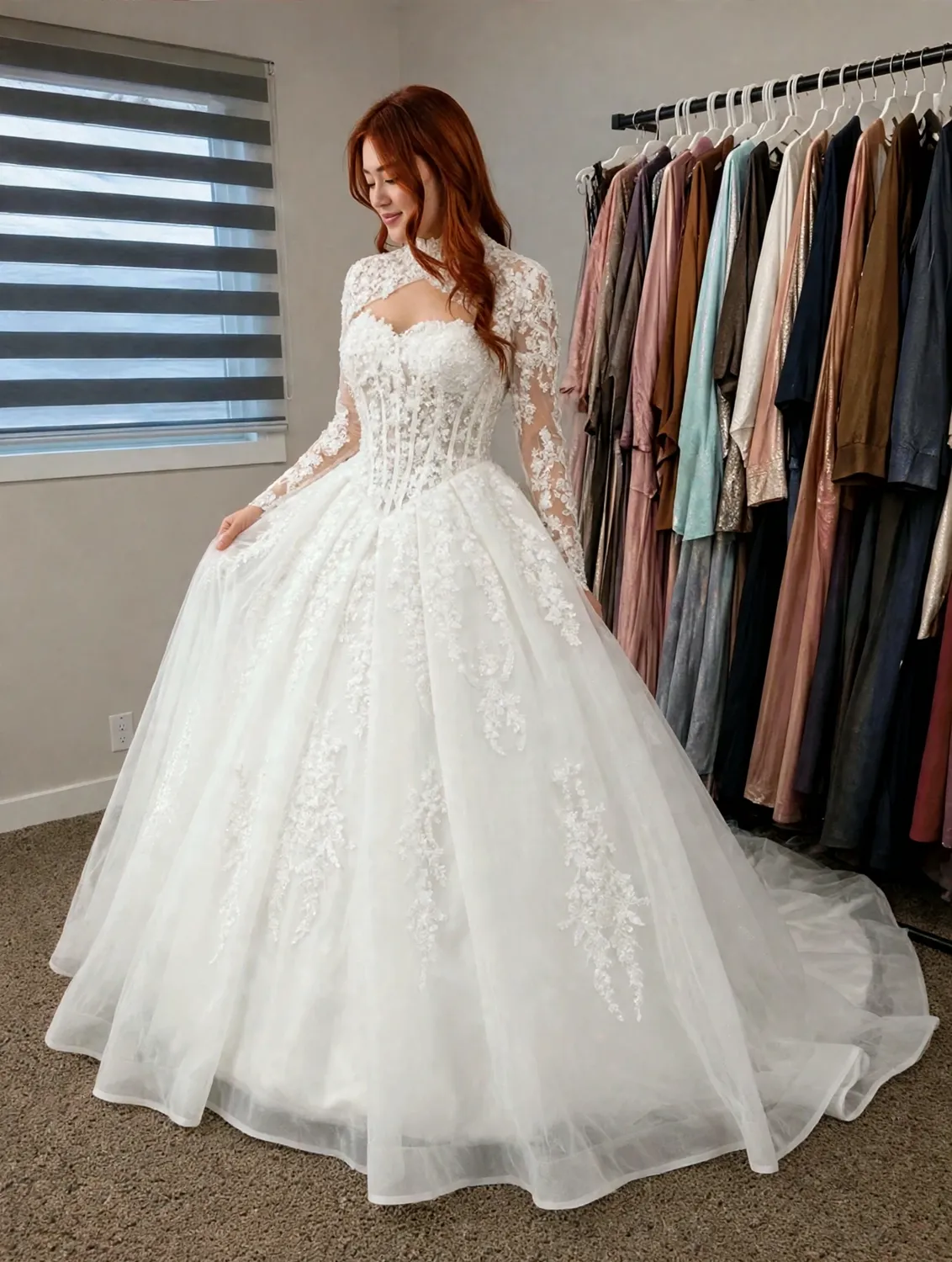
One dress, two ceremonies' worth of looks: the convertible wedding dress changes between the ceremony and the reception — sleeves come off, a sweeping overskirt lifts away to reveal a fitted gown, a train detaches, a bolero appears or disappears. It's part design, part theatre, and for brides torn between two dresses, it can be the answer that ends the argument. Here's how convertible elements work, and how to choose them wisely.
The main transformations
- Detachable sleeves. Lace sleeves for the formality of the ceremony, bare arms for the party. They fasten with hidden snaps, buttons, or elastic loops at the shoulder.
- The overskirt. A full tulle or satin overskirt worn over a slim dress creates a ballgown for the aisle, then removes to reveal a sleek reception silhouette underneath — the most dramatic transformation of all.
- Detachable trains. Cathedral drama for the vows, freedom for the dance floor, without relying on a bustle.
- Removable boleros and capes. A lace bolero adds coverage for a traditional ceremony; a cape swaps in pure drama. Both leave with a few fastenings.
- Convertible straps and necklines. Straps that can be worn on the shoulder, off it, or removed entirely.
What makes a conversion work
The engineering is invisible or it is nothing. Fastenings must hold securely through hugs and movement, release quickly when the moment comes, and leave no trace — no visible snaps on the "after" look, no unfinished edge where the overskirt was. The under-dress must be a complete dress in its own right, fully finished, because it becomes the dress. And the transformation needs a plan: who helps you, where, and how long it takes. Two minutes in the bridal suite with your maid of honour is the target; practise it once before the day. In our Collections you'll find dresses built around detachable elements, and our Gallery shows how seamlessly the joins can disappear.
Convertible vs. a second dress
A separate reception dress offers total freedom — different colour, different everything — but means a full change and a second dress to manage. A convertible gown keeps you in your dress all day, transforms in minutes, and carries the ceremony's emotion into the party with you. Brides who love one dress but two moods usually land on convertible; brides who love two unrelated dresses land on the second look. Neither is wrong — but decide which bride you are before the design stage, because convertible features are built in from the first pattern, not added later.
Why custom suits convertibles
Every detachable element depends on exact placement: sleeve fastenings at your shoulder point, an overskirt waistband at your waist, joins aligned to your proportions. Made to your measurements, those mechanisms sit precisely where your body needs them, which is what makes the transformation smooth instead of fiddly. Our Custom Process page shows how designs like these are planned from the first appointment.
A small logistics note that makes a big difference: schedule the transformation. Tell your coordinator and photographer when it happens — usually right after the ceremony or before the reception entrance — and give it a place, a helper, and five unhurried minutes. Brides who plan the moment get the dramatic entrance and the photographs; brides who improvise it tend to lose ten minutes and a little composure. It is the easiest drama you'll ever stage-manage, precisely because the dress was designed for it.
Plan your transformation
Bring us both of your looks — the ceremony dream and the reception one — and let's design the dress that becomes each of them. Book a private try-on in Martindale NE, Calgary at (587) 434-7634.