The Mura Journal
Open-Back Wedding Dresses
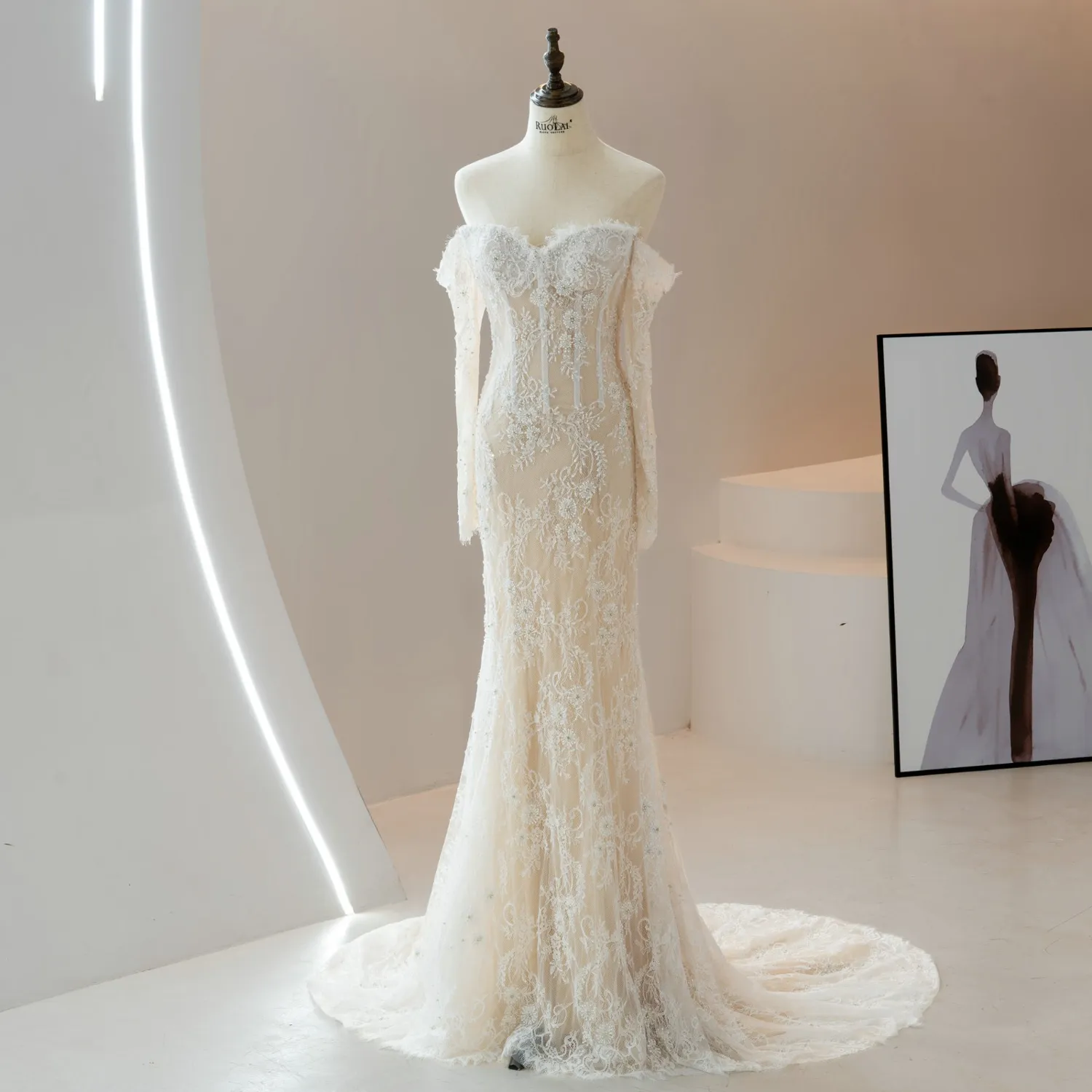
The open-back dress performs a small magic trick: demure from the front, unforgettable from behind. It's become one of the most requested design directions we hear about, and it's easy to see why — it delivers drama without baring everything, and it turns the walk down the aisle into a reveal. But an open back is also an engineering problem. Here's what makes one work beautifully, and what to check before you commit.
How open is open?
"Open back" covers a spectrum. At the gentle end, a scoop that dips just below the shoulder blades — elegant, bra-friendly, and suitable for any ceremony. In the middle, a V or scoop to the mid-back, often framed with lace edging or a row of covered buttons that seem to fasten nothing at all. At the dramatic end, a plunge to the waist, usually stabilized by illusion net or delicate straps so the dress stays exactly where it was placed. None of these is more "correct" — the right depth is the one that matches your comfort, your venue, and how traditional your ceremony setting is. You'll find the spectrum across our Collections.
The support question
- Structure moves inward. Without a full back, support comes from the bodice's internal construction and a waist that truly fits — the dress anchors at the waist and holds from there.
- Illusion net is the quiet hero. A sheer panel across an open back keeps the look while holding everything in position; scattered with lace, it reads as design rather than scaffolding.
- Straps change jobs. On open-back gowns, straps are often decorative or stabilizing rather than load-bearing — which is why their placement has to be precise to the centimetre.
This is a design where made-to-measure earns its keep. An open back altered from a standard size often gaps or pulls, because the geometry depends entirely on the length of your torso and the placement of your waist. Cut from your measurements, the dip lands exactly where it should. Our guide to how long a custom dress takes explains the making process behind details like these.
Undergarments and skin
Plan the practical side early: a low back rules out a standard bra, so brides choose built-in cups, adhesive options, or a low-back bodysuit — decide at the design stage, not the week before. And if your wedding is outdoors in Alberta's summer sun, remember that an open back is a sunburn map waiting to happen; sunscreen before dressing, applied early enough to dry completely, protects both skin and fabric.
When it works best
Open backs flatter brides who love their shoulders and back, suit warm-weather and destination weddings, and pair beautifully with updos that clear the view. They also photograph magnificently during the ceremony — the angle your photographer gets most.
If your ceremony is in a place of worship with coverage expectations, an open back doesn't have to rule you out — it needs a partner. A lace bolero or a sheer jacket worn for the ceremony and removed afterwards gives you both the respectful entrance and the reveal, and it's a combination we design for often. The same trick serves winter brides in Calgary, who gain warmth for outdoor photos and lose the layer indoors. Ask about pairing options when you try on; the two looks can be planned as one design from the start.
Find your depth
Bring your open-back references to a private try-on and we'll talk honestly about depth, support, and structure for your body — then make it to your measurements so it stays flawless all day. Book in Martindale NE, Calgary by calling or texting (587) 434-7634.