The Mura Journal
Two-Piece Wedding Dresses: Tops, Skirts and Separates
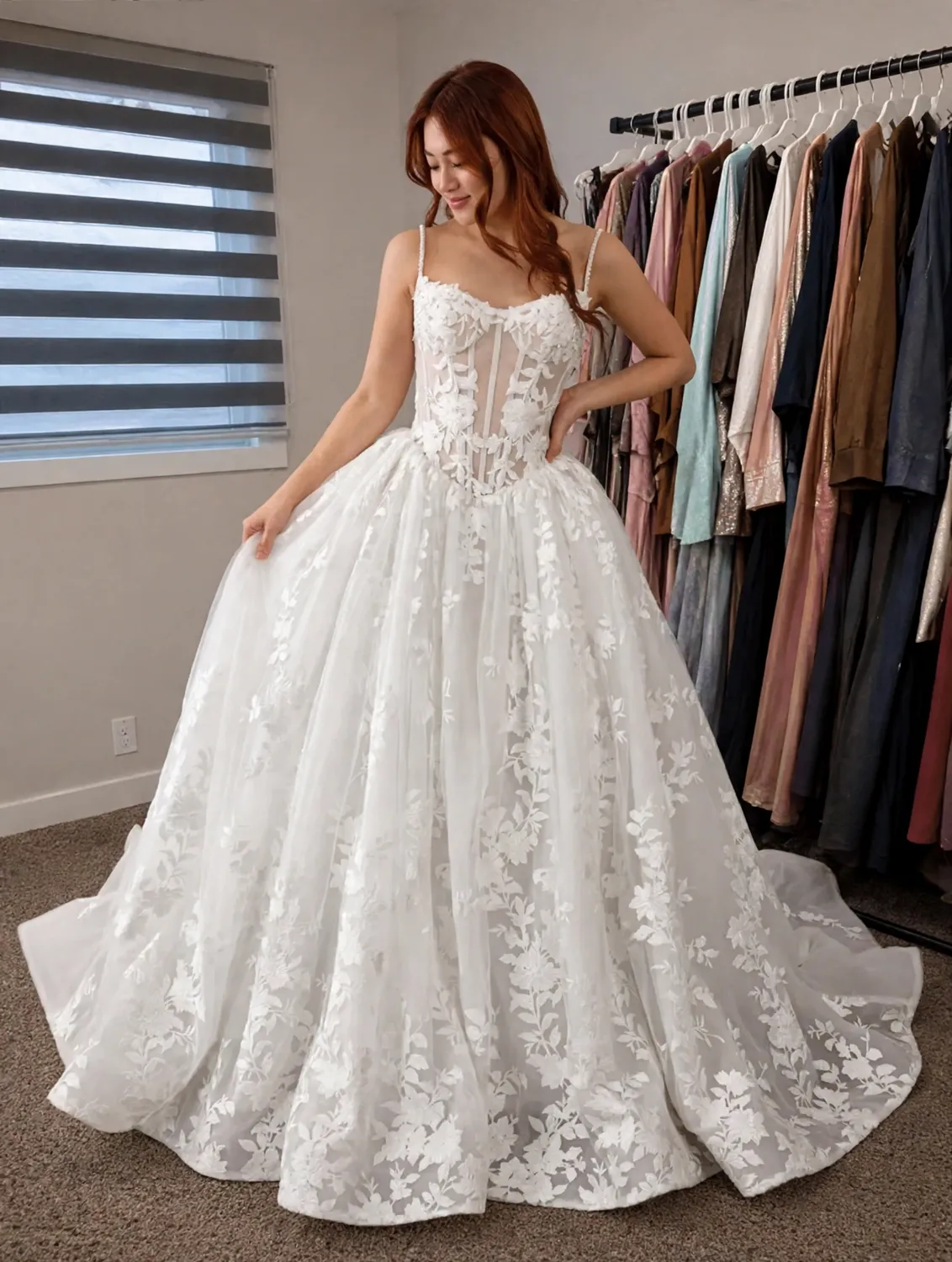
Not every wedding dress is a dress. Two-piece bridal — a separate top and skirt, designed to be worn together — has moved from fashion-forward experiment to a genuinely practical option, and it solves problems a one-piece gown can't. It also raises questions a one-piece never asks. If the idea intrigues you, here's the honest tour: where separates shine, where they demand care, and who should choose them.
How two-piece bridal works
A two-piece outfit pairs a bodice or top — cropped, corseted, lace, or even a fine knit — with a skirt chosen independently: full tulle, sleek satin, fitted, or flowing. Some sets are designed to read as one seamless dress, the top meeting the skirt's waistband exactly. Others embrace the separation, showing a sliver of midriff or contrasting textures deliberately. The styling range is enormous, from a lace crop top over a ballgown skirt (youthful, festival-hearted) to a tailored crepe top with a column skirt (pure modern minimalism). You'll spot separates among the styles in our Gallery — notice how often they read as a single gown until you look twice.
The real advantages
- Mixing proportions. Different sizes on top and bottom stop being a problem — each piece is made to its own measurement.
- Two looks, honestly earned. Change only the top for the reception, or only the skirt, and the outfit transforms for half the commitment of a second dress.
- Rewear potential. A beautiful bridal skirt can be restyled for anniversaries; a lace top pairs with trousers for formal events. Few wedding dresses get a second life — separates often do.
- Comfort and movement. Without a single structure joining bodice to skirt, sitting, eating, and dancing can feel freer — the waistband and top move with you rather than as one unit.
The honest challenges
Alignment is the craft issue: the top must meet the skirt at exactly the right point through a day of movement, or a gap opens where none was designed — or the top rides over the waistband untidily. This is a strong argument for having separates made to your measurements as a set, fitted together, rather than assembled from unrelated pieces. Photography angles matter too; a set that shows midriff will show it in every candid, so choose that look because you love it, not because it surprised you in a mirror. And very formal or traditional ceremonies sometimes call for the seamlessness of a single gown — context is a legitimate design input.
Who chooses separates
Brides with different top and bottom proportions, brides planning two distinct looks, brides marrying somewhere warm or informal, and brides who simply love fashion and want their wedding outfit to prove it. If you're curious whether the style suits your day, our Calgary dress shopping guide has a useful section on matching dress choices to venues.
The join between top and skirt is where separates succeed or fail, so it's finished with intention: the skirt's waistband is structured to sit flat and stay put, the top's hem is weighted or shaped to rest exactly against it, and the two pieces are fitted together on your body, not separately on a table. In photographs, a well-finished set reads as one gown until the moment you choose to reveal otherwise — and that control over the reveal is the whole charm of the style.
Design your set with us
Because our dresses are custom, separates are designed as a true set — top and skirt measured, fitted, and finished together so they behave like one dress with superpowers. Bring your inspiration to a private try-on in Martindale NE, Calgary; call or text (587) 434-7634 to book.