The Mura Journal
Wedding Dress Lace: Types Every Bride Should Know
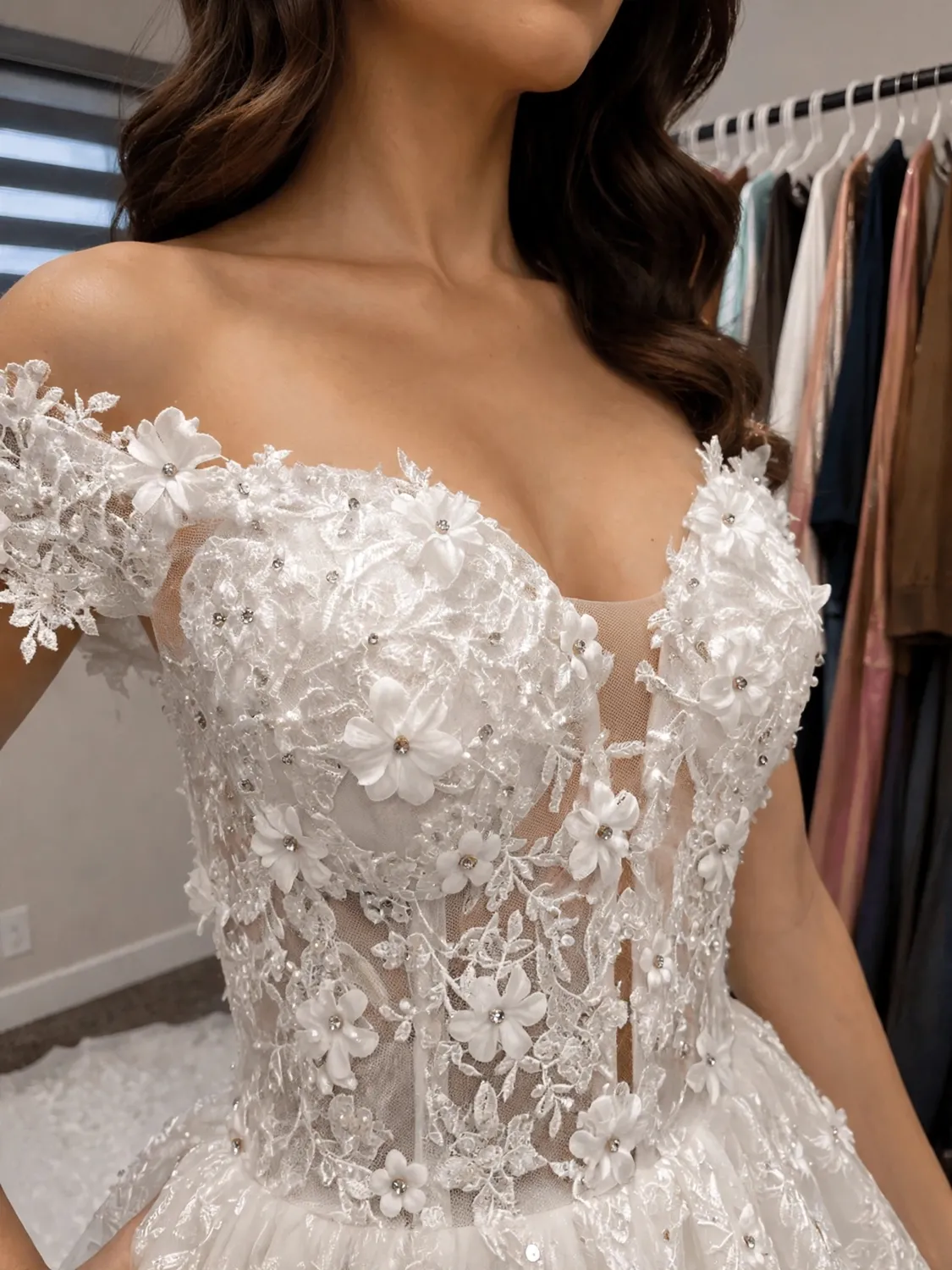
"Lace" is not one fabric — it is a whole family of them, and the differences change how a wedding dress looks, feels, drapes, and photographs. Brides don't need a textile degree, but knowing the main types turns a vague "I like lace" into a clear conversation at your appointment. Here are the laces we talk about most at our Calgary boutique.
Chantilly lace
The softest of the family. Chantilly is made on a fine net background with delicate floral patterns and a characteristic scalloped edge. It drapes like water, feels weightless, and photographs with a soft, romantic blur at the edges. It is the lace of floaty sleeves, gentle overlays, and veils. Its delicacy is also its caution: it snags more easily than sturdier laces, so it shines in designs where it isn't pulled tight over high-friction areas.
Alençon lace
Alençon is Chantilly's bolder sister. The same floral motifs are outlined with a fine cord — called cordonnet — which gives the pattern a slightly raised edge and crisp definition. In photographs, Alençon lace reads clearly from a distance, which is why it is a favourite for bodices and skirts that will be seen from the back of a ceremony space. It has a touch more structure and suits gowns that need their lace to hold a shape.
Appliqué lace
Appliqué is less a fabric than a technique: individual lace motifs are cut out and sewn onto net, tulle, or the dress itself. This is how modern gowns achieve that floating, scattered look — flowers that drift down a bodice, gather at a waist, and thin out across a skirt exactly where the designer wants them. Appliqué is the most customisable lace of all, because placement is a design decision, motif by motif. When your dress is made to your exact measurements, appliqué is placed for your proportions, which is why two dresses in "the same" appliqué lace can look entirely different.
Other laces worth knowing
- Venice (Guipure) lace — dense, sculptural motifs with no net background; bold, modern, and substantial.
- Eyelet lace — embroidered cotton with cut-out patterns; fresh, summery, and lovely for garden weddings.
- Beaded and sequined lace — any of the above with embellishment hand- or machine-applied; sparkle built into the pattern itself. Our guide to beaded wedding dresses covers the sparkle side in depth.
- Stretch lace — contains elastane for a close, forgiving fit on fitted silhouettes and sleeves.
How to choose at your appointment
Hold the lace against your skin — some brides find certain laces scratchy at the neckline, and comfort at the collarbone matters for a twelve-hour day. Hold it against your dress fabric, because lace over ivory reads differently than lace over champagne or blush. Then look at it from across the room, not just up close: your guests and your camera will mostly see it from a distance. In our Gallery you can study how different laces photograph on finished gowns before you come in.
Mixing laces on one dress
Many gowns quietly use two laces: a defined Alençon on the bodice where the camera lingers, a softer Chantilly through the sleeves or skirt where drape matters. Mixing works when one lace clearly leads and the other supports. It fails when two bold patterns compete at the same size. At your appointment we will lay combinations side by side so you can see which lace should be the star of your dress.
Want help matching a lace to the dress in your head? Book a private try-on at Mura Boutique in Martindale NE, Calgary. We will compare lace samples together and place the motifs for your frame. Most custom dresses take about 4–6 weeks to make. Call or text (587) 434-7634 to book.