The Mura Journal
Wedding Dress Measurements: What We Take and Why
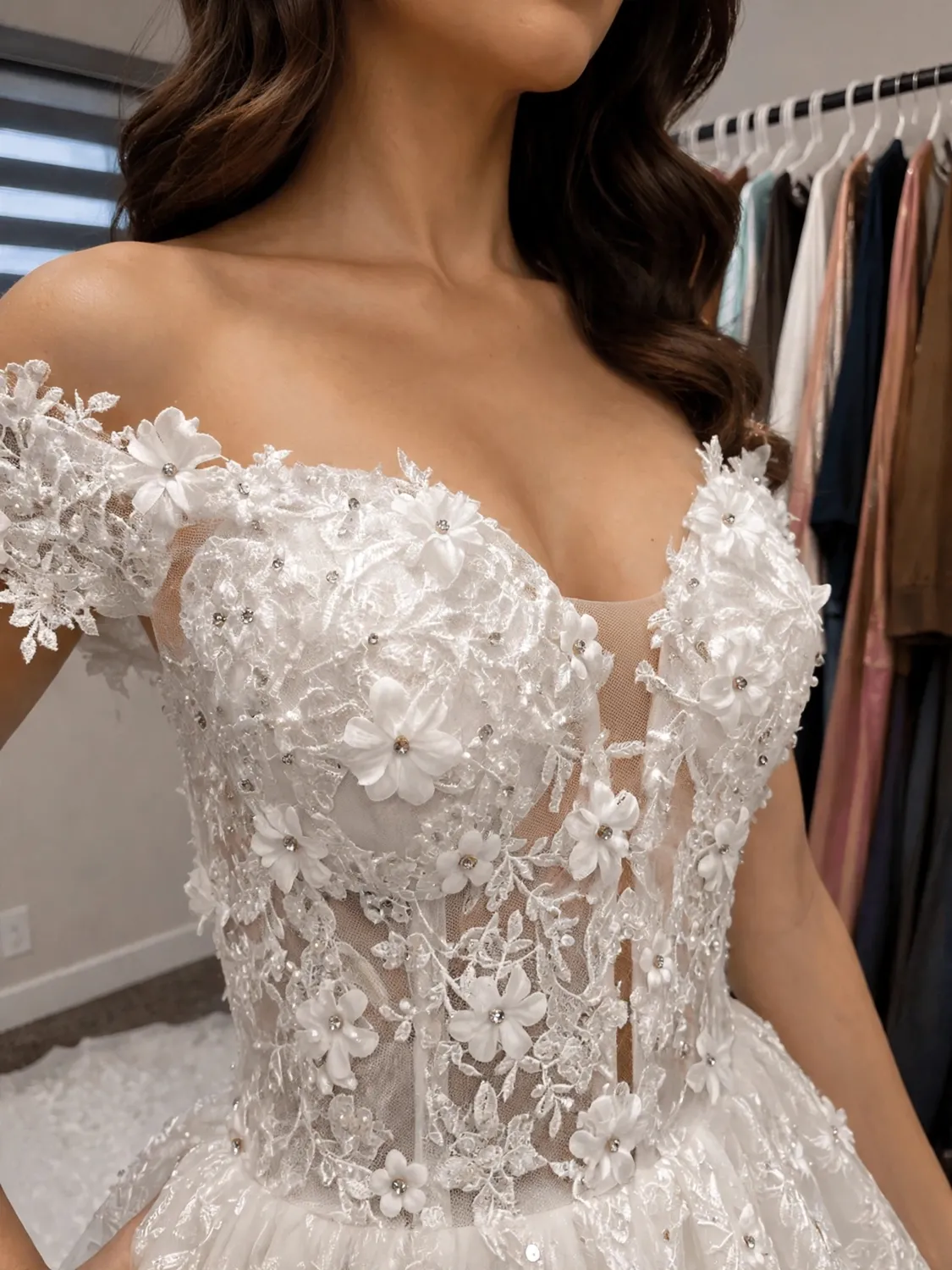
Every made-to-measure dress begins with a tape measure and about fifteen unhurried minutes. Brides are often curious — sometimes nervous — about wedding dress measurements: what exactly gets measured, why so many numbers, and what happens with them afterwards. Here's the full picture, so the tape holds no mysteries.
The core measurements, and what each one controls
- Bust — around the fullest point; it sets the bodice's structure and where support is built.
- Underbust and waist — the waist is measured at your natural waistline, the narrowest point, not where trousers sit. These two define the corsetry and the silhouette's narrowest line.
- Hips — crucial for fitted styles like mermaid and sheath; generous for ballgowns but still recorded.
- Hollow to hem — from the dip between your collarbones to the floor; this is the dress's length, taken with your wedding shoe height in mind.
- Torso and shoulder measures — back length, shoulder width, and armhole depth are why a custom bodice sits where it should instead of creeping or gaping.
- Arm measures — bicep and sleeve length for brides choosing sleeves, so lace cuffs end at the wrist, not the knuckle.
Why more numbers means fewer fittings
A standard-size dress is built from three or four numbers and a hope. A custom dress is built from your full set, which is how it can arrive already fitting — the bodice length matches your torso, the waist seam lands on your waist, the straps are your shoulder's length, not a chart's. The close-up bodice work in our Gallery only sits that smoothly because the measurements beneath it were exact. More numbers up front is the entire trade for fewer surprises later.
How to make your measuring appointment count
Wear the undergarments you plan to wear on the day, or their closest cousins — a different bra changes the bust measure and the bodice built on it. Stand naturally; the tape should meet your real posture, not a sucked-in performance neither you nor the dress can sustain for twelve hours. Mention your shoe height even if the shoes aren't bought yet. And if your body is mid-journey — training, recovering, expecting — say so: honest context lets us plan the timeline and the final try-on sensibly.
What if your measurements change?
Bodies move a little between ordering and wedding; that's normal life, and a final try-on exists partly for this reason. Small shifts are far easier to accommodate when the dress was patterned from a full, accurate set in the first place. The important thing is that the original numbers were honest — a dress built on wishful measurements helps no one. At Mura Boutique, measurements are taken in person at your appointment in Martindale NE, privately and without commentary; they're data for a pattern, nothing more.
And a reassurance for anyone dreading the tape: measurements are not a judgement, a size, or a label that follows you anywhere. They never appear on your dress, your invoice description, or anywhere a guest could see them. They exist for exactly one purpose — so that the person patterning your gown can build it around the body that will actually wear it. Every bride who has ever stood in a fitting room, at every size, has been measured the same unremarkable way.
Numbers first, magic second
It isn't the most romantic part of the process, but it's the part everything else stands on. When you're ready to begin, book a private appointment by calling or texting (587) 434-7634. Your dress will be made to these measurements and no one else's — that's the whole point of custom. Read more about the journey on our Custom Process page.