The Mura Journal
Organza Wedding Dresses: Crisp Volume Without Weight
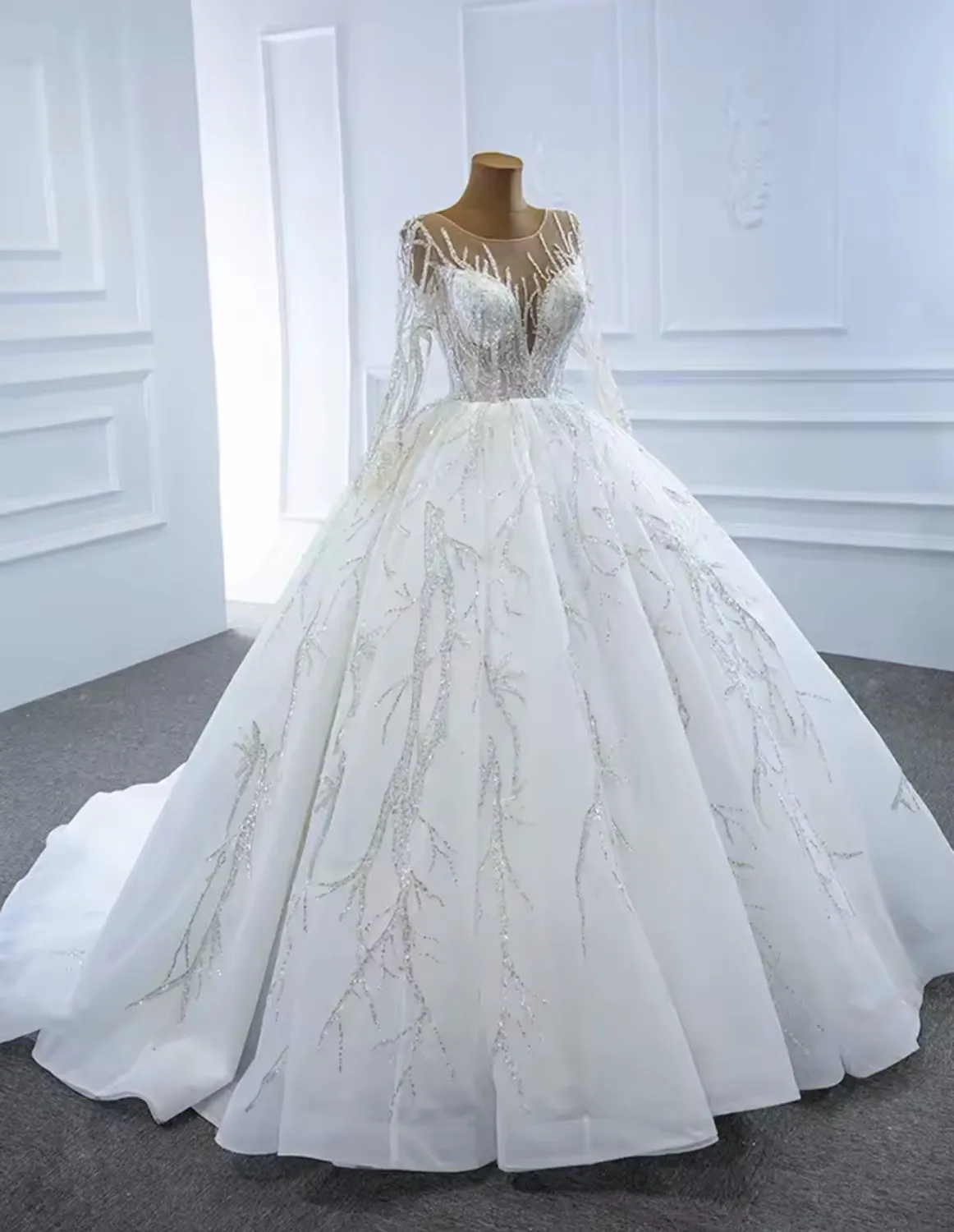
Organza is the fabric brides choose when they want volume with a crisp, modern edge. It holds shapes that softer fabrics can't — sweeping ruffles, sculpted skirts, dramatic sleeves — while staying surprisingly light on the body. If tulle is a cloud, organza is architecture you can wear.
What makes organza different
Organza is a sheer, plain-woven fabric with a stiff, springy hand. Unlike chiffon, which collapses into folds, organza pushes back: pleats stay pleated, ruffles keep their curl, and a skirt keeps its silhouette from the first photo to the last dance. It has a subtle sheen — more glow than shine — and a faint crisp rustle when you move that many brides secretly love. Because it is sheer, organza is layered or used over a structured underlayer, which gives designers enormous freedom with colour depth and shape.
Designs that need organza's backbone
- Ballgowns with real architecture — organza skirts hold a wide, smooth dome of volume without the weight of heavy satin.
- Ruffles and flounces — tiered skirts and cascading ruffles only work in a fabric that holds an edge; organza is the classic choice.
- Statement sleeves — puff and sculptural sleeves keep their shape all day instead of deflating by dinner.
- Overskirts — a detachable organza overskirt adds ceremony drama over a slim dress, then comes off for the reception.
One of the most requested looks at our boutique — the beaded illusion ballgown — relies on this family of structured sheers to keep its skirt grand but graceful. You can see the effect in our Collections, where the volume reads luxurious rather than heavy.
Organza versus tulle and chiffon
Brides often meet all three fabrics in one appointment, so here is the honest comparison. Tulle is softest and most romantic, building volume from many whisper-light layers. Chiffon is fluid and matte, all movement and drape. Organza is the crisp one — fewer layers, more defined shapes, a cleaner and more modern finish. None is better; they answer different dreams. A useful trick: if you keep using words like "sculpted," "dramatic," and "structured," you are probably an organza bride. If your words are "soft," "floaty," and "romantic," start with tulle or chiffon.
Practical notes
Organza's crispness means it can crease if it is crushed in storage or transport, so hang your dress with room to breathe and steam it gently before the wedding — it responds well to steam. Its edges are usually finished with narrow hems or horsehair braid, which is what gives hems that lovely, deliberate wave. And because organza is light for its volume, even a grand organza ballgown is comfortable to wear for hours — a fact that surprises brides who expect big to mean heavy.
Organza and colour
Because organza is sheer, it layers colour the way watercolour layers paint. A single layer of blush organza over an ivory base gives a blush tint with real depth; two layers deepen it. Designers also use a crisp organza layer over lace to soften the pattern's edges without hiding it. If you love a coloured gown but want it whisper-soft rather than bold, ask about building the colour in organza layers at your appointment.
If sculpted volume is your vision, book a private try-on at Mura Boutique in Martindale NE, Calgary. We will compare organza against softer fabrics on your frame and design the silhouette to your measurements. Most custom dresses take about 4–6 weeks. Call or text (587) 434-7634 to book.