The Mura Journal
Tulle Wedding Dresses: Light as Air
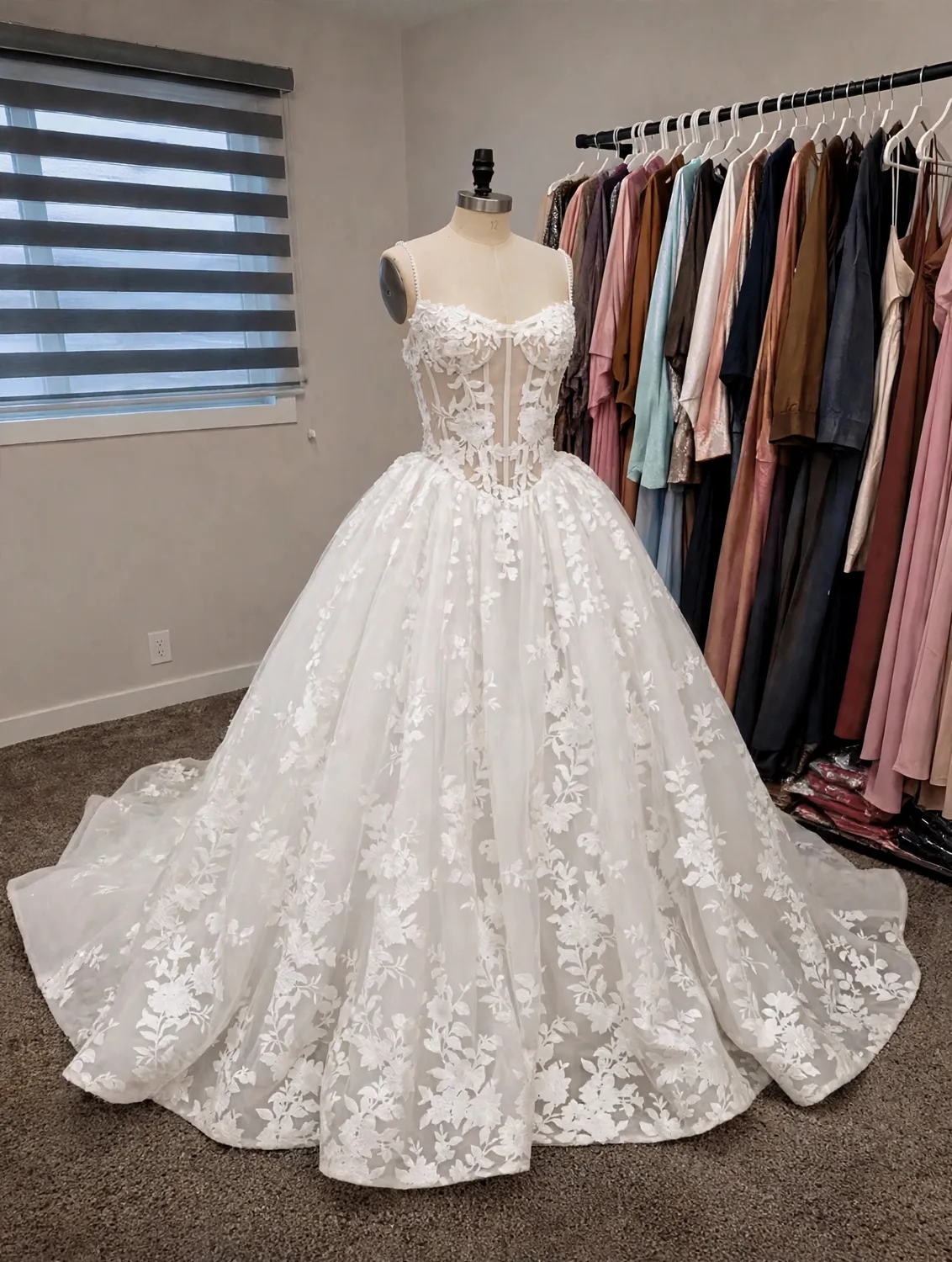
Tulle is the fabric of floating. It is the net that makes ballgowns billow, veils drift, and skirts move like they are underwater in the best possible way. Brides who want romance without weight — and Calgary brides marrying in summer heat especially — fall for tulle fast. Here is what makes it special, and how to wear it well.
What tulle is
Tulle is a fine, lightweight netting, traditionally silk and now usually nylon or polyester. A single layer is nearly transparent; stacked in layers, it builds volume with almost no weight at all. That layering is the whole trick of a tulle skirt: ten layers can weigh less than one layer of satin, yet hold a silhouette that fills a doorway. Tulle also comes in stiffness grades — soft tulle drapes and sways, while stiffer netting holds architectural shapes. Most gowns use soft tulle for the outer layers and firmer net underneath for structure.
Where tulle shines
- Ballgown and A-line skirts — layered tulle creates the classic princess volume that still lets you walk, sit, and dance.
- Veils — the very same net, in its softest form, is what bridal veils are made from.
- Illusion necklines and sleeves — skin-toned tulle is the invisible canvas that makes lace appear to float on skin.
- Overskirts and overlays — a tulle layer over satin or lace softens the whole dress and adds movement.
Colour is tulle's secret talent. Because it is translucent, layered tulle can blend shades — ivory over blush, champagne over ivory — creating depth no single fabric colour can match. Several gowns in our Collections use exactly this layering to get their soft, dimensional colour.
Wearing tulle comfortably
Tulle's lightness is its comfort superpower on a long day and a crowded dance floor. It doesn't trap heat the way heavy satins can, which matters for summer weddings and packed reception halls alike. Two honest cautions: tulle can catch on rough jewellery, sequins, and brick or bark outdoors — lift your skirt on gravel and grass. And static in dry winter air (Calgary brides know this one) can make layers cling; a light anti-static spray on the morning of the wedding solves it. For winter-specific fabric advice, pair this with our thoughts on satin, tulle's most classic partner.
Tulle and sparkle
Glitter tulle — net with fine sparkle woven or bonded through it — has become a modern favourite because it glows rather than glitters: no single sequin shouts, but the whole skirt shimmers as you move, especially under evening light. Used as one layer among plain ones, it gives a ballgown a starlit quality without any added weight or scratchiness against the skin.
How many layers do you need?
More than brides expect, and fewer than they fear. A gentle A-line might use three or four layers of soft tulle over a lining; a full ballgown can use eight or more, graduated so the skirt builds smoothly from the waist instead of puffing all at once. The count is a design decision we make with your height and frame in mind — the goal is volume that looks inevitable, not inflated, and a hem that moves as one cloud rather than separate sheets.
If a floating tulle skirt is in your dreams, book a private try-on at Mura Boutique in Martindale NE, Calgary. We will layer shades together in front of you and design the volume to your height and frame. Most custom dresses take about 4–6 weeks to make. Call or text (587) 434-7634 to book.