The Mura Journal
Satin Wedding Dresses: Smooth, Structured, Timeless
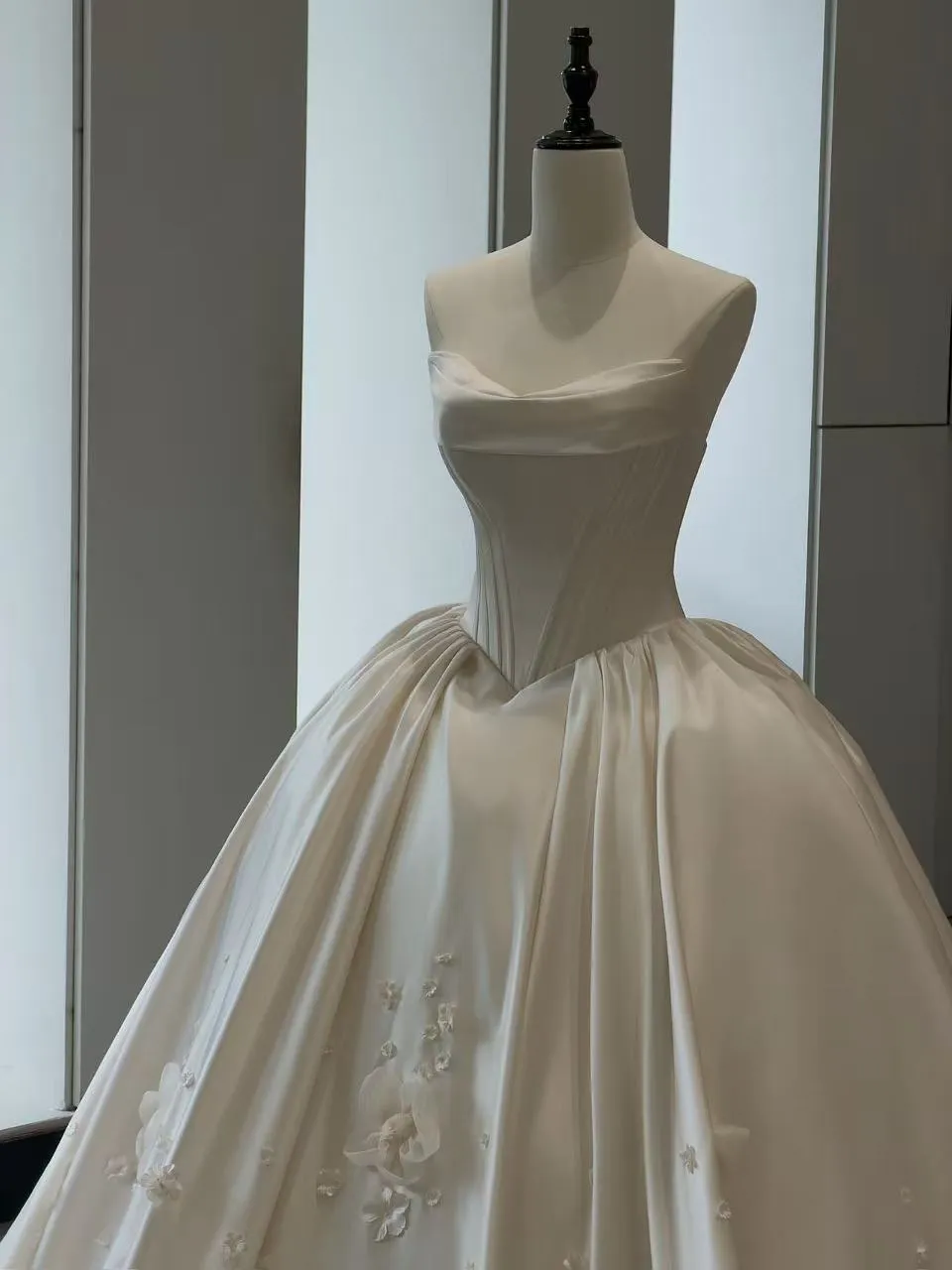
Satin is the fabric of the classic bride — smooth, light-catching, and unmistakably formal. When a bride tells us she wants to look "timeless," satin is usually somewhere in the conversation. It has dressed royal brides and minimalist brides alike, because its beauty is in the surface itself: no pattern, no texture, just a clean luminous sheen that lets the cut of the gown do all the talking.
What satin actually is
Satin refers to a weave, not a fibre. The weave floats threads across the surface, which is what creates that signature smooth face and gentle glow. Bridal satins are commonly made from silk or high-quality polyester, and they range from fluid, drapey charmeuse to the firm, sculptural duchess satin used in ballgowns. Mikado — a blended satin with a subtle texture and more body — sits in the same family and has become a modern favourite for structured skirts and clean architectural lines.
The silhouettes satin loves
- Ballgowns. Duchess satin and mikado hold a full skirt's architecture without collapsing, and the sheen makes every fold look deliberate.
- A-lines. A satin A-line is the definition of timeless — clean, graceful, and right in every decade of photographs.
- Sheaths and fit-and-flare gowns. In a fluid satin, these drape close and liquid; in a heavier satin, they look carved.
- Corset bodices. Satin's smoothness shows off boning and seaming beautifully — one of our champagne satin corset gowns is a perfect example in the Gallery.
Honest things to know about satin
Satin shows what is underneath it. On a fitted gown, that means the fit must be excellent — wrinkles and pulling have nowhere to hide. This is a strong argument for made-to-measure: when the dress is cut to your exact measurements, satin skims instead of clinging in the wrong places. Satin also creases when you sit, which is normal and expected; a good steamer session on the wedding morning handles most of it, and fuller skirts disguise the rest. Finally, satin can be warm. For a July wedding, consider satin for the bodice with a lighter skirt fabric, or choose a lighter-weight satin — a design conversation we are happy to have. Our tulle guide covers the lightest alternative.
Styling satin
Because satin is a blank, luminous canvas, accessories get to shine. Pearl jewellery echoes its softness; a lace veil adds the texture the dress deliberately omits; a beaded belt or bow at the waist creates a focal point. Satin also pairs beautifully with a pearl-button back — the kind of detail guests photograph during the ceremony without even realising why they love it.
A note on colour
Satin's sheen changes how colour reads. Ivory satin glows warm and soft; bright white satin looks crisp and formal; champagne satin — a favourite at our boutique — has a golden depth that flatters warm skin tones and candlelit venues. Because the surface reflects light, satin always looks a shade lighter in photographs than in the mirror, which is worth knowing when you compare swatches. Judge your colour in daylight, against your skin, and beside your partner's outfit if you can.
If satin's clean glow is your idea of bridal, book a private try-on at Mura Boutique in Martindale NE, Calgary. We will compare satin weights and silhouettes against your venue and season, and design the dress to your measurements. Most custom dresses are ready in about 4–6 weeks. Call or text (587) 434-7634 to book your appointment.